Can Lithium Universe Overcome Funding and Scale-Up Risks in Critical Metals Recycling?

Lithium Universe Limited has secured exclusive rights to a breakthrough silver extraction technology from Macquarie University, promising high-purity silver recovery from solar panels while preserving valuable silicon wafers. This innovation complements their existing recycling and lithium refining strategies in North America.
- Acquisition of Macquarie University’s JESE silver extraction technology
- JESE achieves over 95% silver recovery with minimal acid use and wafer preservation
- Integration with Microwave Joule Heating Technology for full solar panel recycling
- Evaluation of Brownsville, Texas site for combined PV recycling and lithium refining
- Successful $2.5 million placement and government grant application to fund development
A New Frontier in Solar Panel Recycling
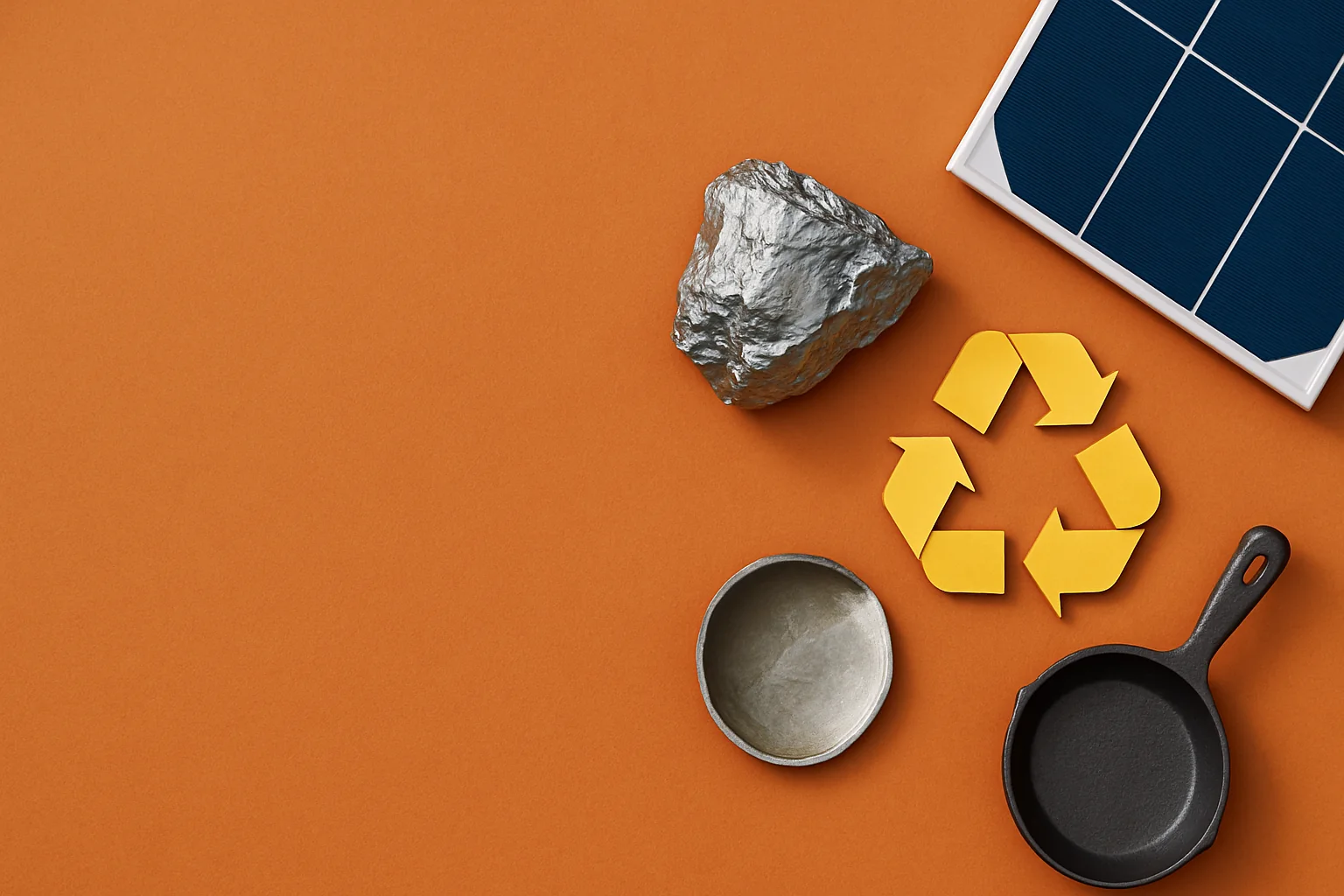
Lithium Universe Limited (ASX – LU7) has taken a significant step forward in the critical minerals recycling sector by acquiring global rights to Macquarie University’s Jet Electrochemical Silver Extraction (JESE) technology. This innovative process uses a low-voltage electrochemical jet to selectively extract silver from solar panels, achieving near-complete recovery rates above 95% while preserving the integrity of the silicon wafers. This contrasts sharply with conventional recycling methods that often destroy wafers and generate hazardous waste.
The JESE technology is designed to work hand-in-hand with Lithium Universe’s recently acquired Microwave Joule Heating Technology (MJHT), which efficiently delaminates solar panels without damaging glass or silicon components. Together, these technologies form a comprehensive recycling platform that could transform how end-of-life solar panels are processed, unlocking valuable materials and reducing environmental impact.
Strategic Expansion in North America
Beyond technology acquisition, Lithium Universe is actively evaluating a site in the Port of Brownsville Business Park, Texas, for a potential solar panel recycling facility. The location offers strategic advantages including robust infrastructure, access to logistics networks, and proximity to growing solar markets. Notably, the site is large enough to accommodate not only recycling operations but also a second lithium carbonate refinery, complementing the company’s flagship Bécancour project in Québec, Canada.
This dual-site strategy positions Lithium Universe to build a binational clean energy metals hub, leveraging synergies between lithium refining and critical metals recycling. The company’s approach aligns with increasing geopolitical momentum in the US and Australia to secure domestic supply chains for critical minerals, especially amid China’s recent export restrictions on lithium conversion technologies.
Validating Efficiency and Purity
Extensive laboratory trials led by Macquarie University researchers have validated JESE’s performance, demonstrating rapid silver recovery with a purity level comparable to Britannia-grade silver (95.95%) within minutes. The process reduces acid consumption by 83%, eliminates secondary effluents, and minimizes contamination, simplifying downstream refining. The preservation of silicon wafers opens future opportunities for recycling high-grade silicon, gallium, and indium, critical materials for electronics and renewable energy technologies.
Further enhancing the technology’s efficiency, the research team optimized electrode designs, finding that precision-engineered sharp cone tips significantly improve silver removal uniformity and recovery yields. These refinements underscore the potential for JESE to disrupt traditional, energy-intensive recycling methods.
Funding and Commercialisation Pathways
To support its ambitious plans, Lithium Universe successfully completed a $2.5 million placement at a slight premium to market price, with funds earmarked for advancing lithium refinery and solar recycling projects. Additionally, the company has applied for an Australian government AEA Ignite Grant to develop an integrated pilot prototype combining MJHT and JESE technologies, aiming to scale from laboratory validation to commercial readiness within 12 months.
The company has also bolstered its research capabilities by appointing robotics and mechatronics expert Mohammadreza Hojati, whose expertise will aid in automating and refining the silver extraction process, further accelerating commercialization prospects.
Positioning Amid Global Supply Chain Shifts
Lithium Universe’s integrated approach comes at a critical time as global demand for silver and lithium surges alongside the renewable energy transition. With solar panel waste projected to reach millions of tonnes globally, the ability to efficiently recover silver and other critical metals presents a lucrative and sustainable business opportunity. Moreover, China’s recent ban on lithium conversion technology exports has heightened the strategic importance of domestic refining capabilities in North America, where Lithium Universe’s projects are well positioned.
While challenges remain, including securing final approvals and scaling operations, Lithium Universe’s technology acquisitions, site evaluations, and funding initiatives collectively signal a company poised to play a pivotal role in the emerging circular economy for critical minerals.
Bottom Line?
As Lithium Universe advances its innovative recycling and refining technologies, investors will watch closely to see if it can turn laboratory breakthroughs into commercial success amid shifting global supply dynamics.
Questions in the middle?
- Will the Australian government grant application succeed and accelerate pilot development?
- How quickly can Lithium Universe scale JESE technology from lab to commercial operations?
- What impact will China’s lithium technology export ban have on LU7’s market positioning?